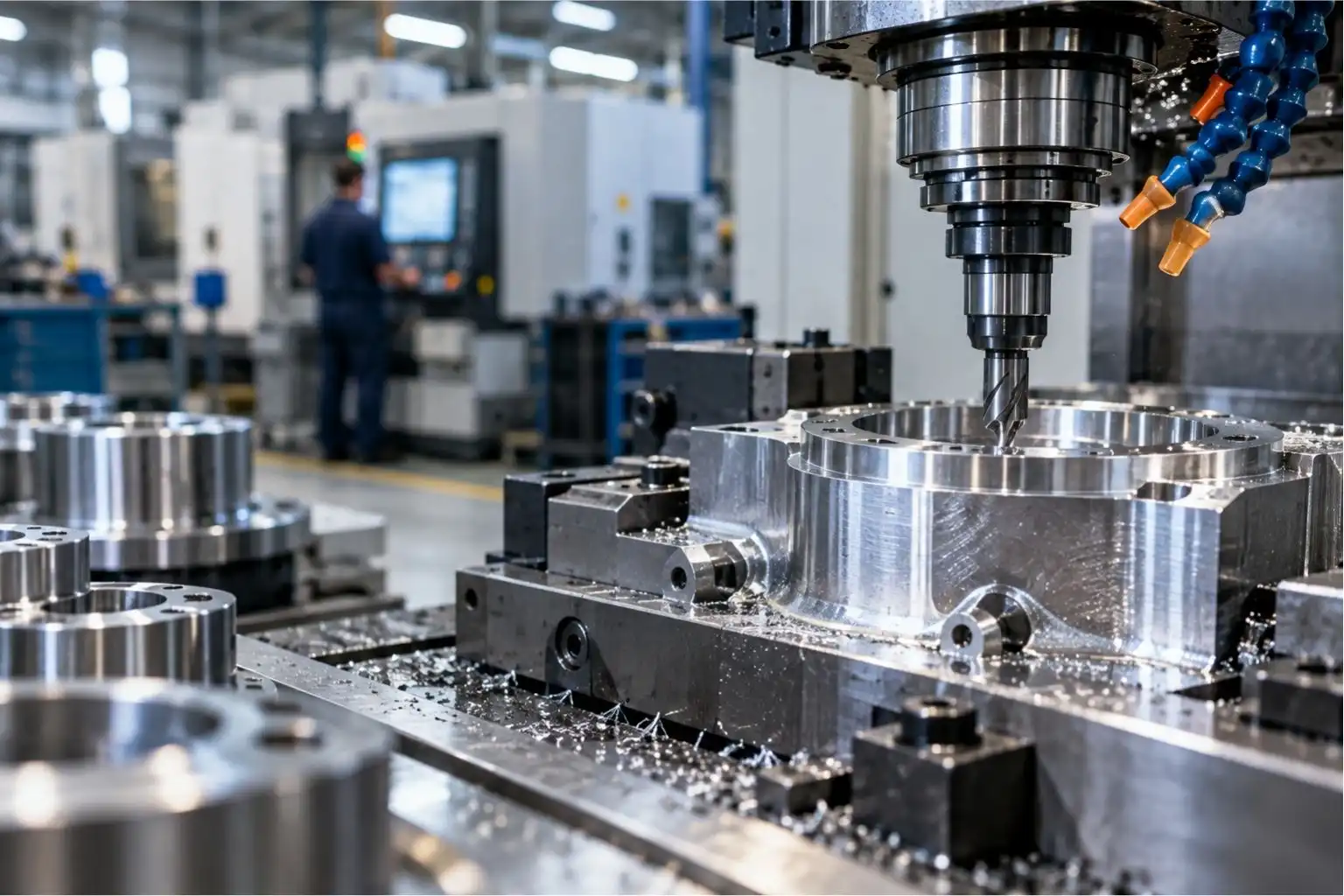
A small machining error can bring an entire production line to a halt. Fixing holes that sit half a millimetre out of position can delay equipment installation, disrupt conveyor repairs and increase manufacturing costs.
According to a 2021 study published by the National Institute of Standards and Technology (NIST), manufacturers relying more heavily on preventive and predictive maintenance experienced 52.7% less unplanned downtime and 78.5% fewer defects than those relying heavily on reactive maintenance.
These findings highlight the importance of preventing equipment failures and maintaining production quality. So, if small errors can cause costly downtime, how can expert precision engineering protect production output?
What is Precision Engineering in Production?
Precision engineering is the design and production of components to tight, repeatable dimensions, so every part fits and functions as intended on the line. It covers everything from the first drawing and material selection through to cutting, assembly and final inspection, with each stage checked against agreed limits. It rests on three core ideas:
- Accuracy: how close a part sits to its intended size.
- Precision: how consistently every part in a batch hits that same size.
- Tolerance: the permitted variation a component must fall inside to fit and function.
Buyers often treat precision as a matter of machine specification and nothing else. In reality, the engineer decides which dimensions matter and how they will be measured and checked during production. Precision manufacturing applies those ideas to real output, so the fiftieth part matches the first and every component fits without filing or forcing.
How Does Expert Precision Engineering Protect Output?
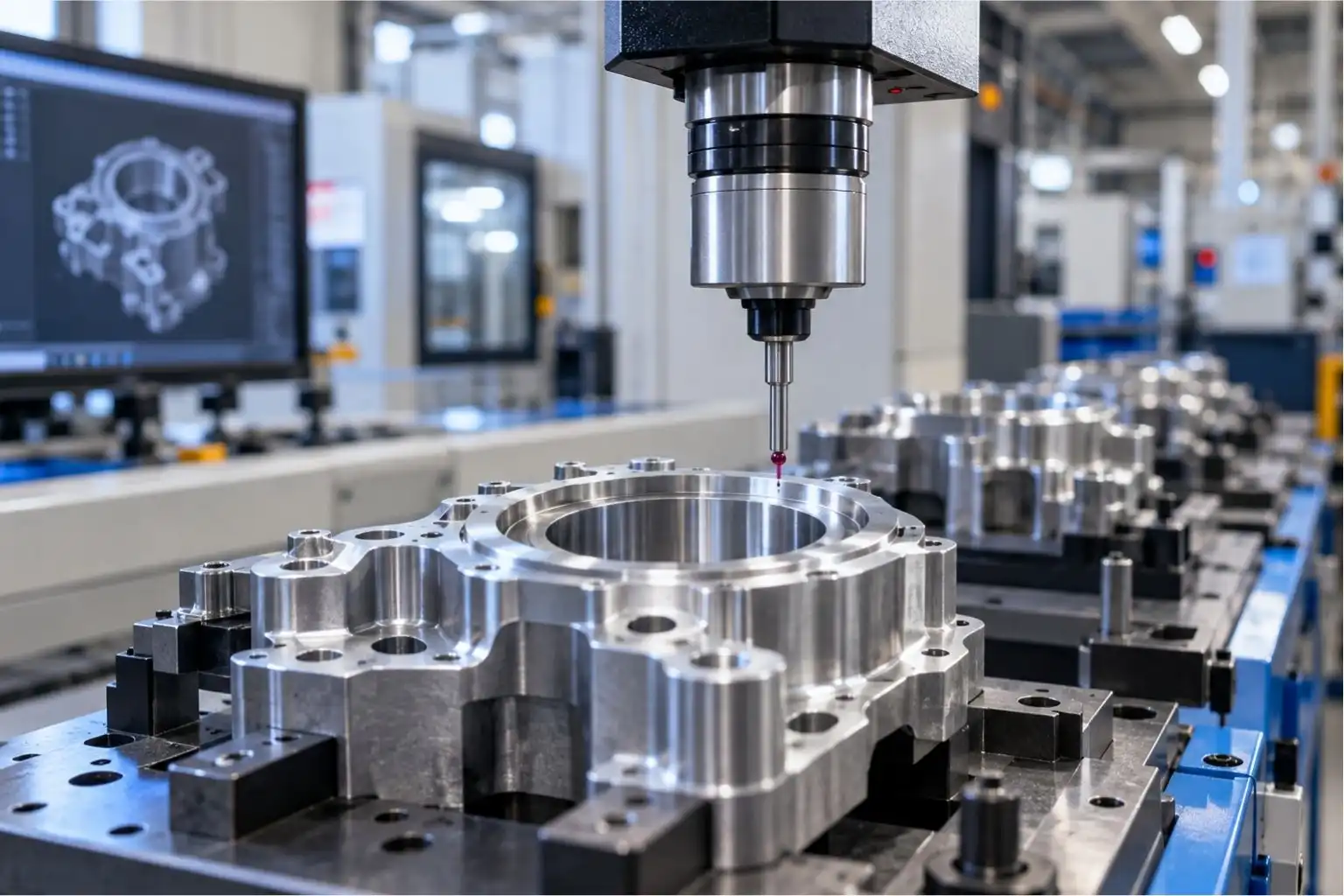
Expert precision engineering protects output by removing the small errors that stop a line, slow it down or waste good raw material. Precision manufacturing on a busy site depends on decisions made long before a cutter touches steel, and the payback shows up in six clear ways.
- Less scrap and rework. When an experienced engineer sets tight tolerances only where a part must locate, seal or move, components pass inspection first time, supporting product quality, and material stays out of the scrap bin. Every rejected part costs material, machine time and labour twice over.
- Faster assembly and installation. CNC precision engineering removes the variation of manual marking out, so parts fit without filing or packing. Our laser profiling service produces clean, consistent steel profiles for repeat components and one-off parts alike.
- Automated equipment that stays in time. Sensors, drives and guards only work as designed when they sit exactly where the drawing says. Our electrical support install and set up machine electrics to match that mechanical accuracy.
- Fewer unplanned stoppages. Aligned shafts, true conveyor frames and accurate transfers mean fewer jams, misfeeds and early bearing failures during a shift. Each avoided stoppage is production time recovered at no extra cost.
- Faults caught before they spread. Calibrated gauges and a first-off check against the drawing catch a setup error on part one, not part five hundred. That check can save an entire run of material and machine time, and strict quality control is fundamental to compliance as well as consistency.
- Steady output over the long term. Wear, vibration and washdown cycles gradually pull equipment out of line. Planned maintenance and inspection visits catch drift early, so worn parts are replaced during planned shutdowns instead of failing mid-shift, which helps improve output over time by reducing drift and avoidable delays.
Precision manufacturing can scale efficiently from prototyping to larger production runs.
Precision Machining vs Traditional Manufacturing: Compared
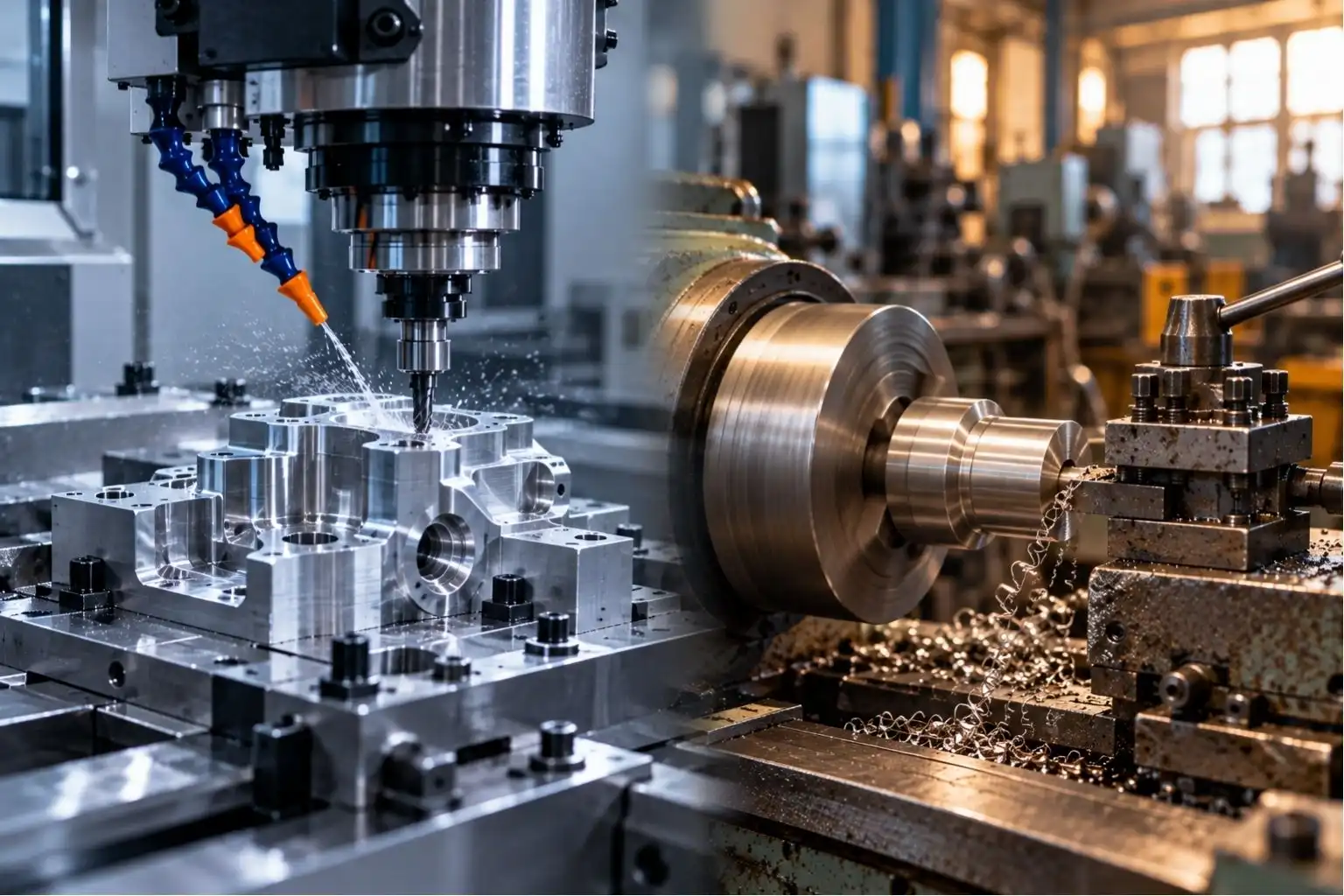
Traditional manufacturing still earns its place, but the gap widens quickly once parts need to repeat, fit first time and run on automated equipment. A modern production site often uses both, with precision engineering reserved for industries and components where repeatability and first-time fit cannot be compromised. Here is how the two approaches compare across the factors production teams care about.
| Factor | Precision engineering | Traditional manufacturing |
|---|---|---|
| Accuracy and control | CNC-controlled cutting to tight, repeatable tolerances | Manual marking out, with accuracy tied to individual skill |
| Repeatability | The fiftieth part matches the first | Small variations between parts in the same batch |
| Design complexity | Complex profiles and hole patterns cut straight from digital drawings | Better suited to simple shapes and one-off changes |
| Inspection | First-off checks and calibrated gauges against the drawing | Visual checks, with problems often found at assembly |
| Cost | Higher setup effort, lower cost per part across repeat runs | Lower setup effort, higher cost per part as volumes grow |
| Waste and fit | Clean edges, less scrap and parts that fit without rework | Extra trimming, filing and rework during installation |
| Downtime risk | Fewer jams, misalignments and early failures | Faults more likely to surface once the line is running |
Traditional methods remain useful for one-off site modifications, simple brackets and quick repairs. A part is a strong candidate for the precision route when it:
- repeats across several machines or production runs
- locates a shaft, bearing, sensor or drive
- forms part of a food-contact surface or hygienic joint
- has to swap with spares held in stores
- sits on automated equipment where timing depends on position
- serves an aerospace application, including turbine blades or airframe parts
- is used in medical devices where accuracy and biocompatibility matter
- is made for automotive components such as high-performance engine parts or fuel injection systems
- supports energy sectors with components for nuclear reactors or wind turbines
The cost row often settles the argument. A precision-cut part can cost a little extra on the first order, yet once rework, fitting time and lost production are counted, the cheaper part is rarely the cheaper option; that broad application across many industries is why the higher setup effort is often justified.
Plan Your Next Project With Singleton
Before your next project goes out to quote, mark the three or four dimensions on the drawing that truly control fit and function, then ask every supplier how they will measure those points and record the results. A clear answer to that single question tells you a great deal about a partner’s accuracy, and a vague one tells you even more.
Singleton Engineering Solutions has designed and built bespoke machinery from Burnley, Lancashire since 2015, supporting food producers and manufacturers across the UK. Our fabrication and manufacturing brings CNC precision engineering, skilled welding and careful inspection together for conveyors, frames and complete production systems. Call 01282 423198 or email office@singletonengineering.co.uk to talk through your next project.
Frequently Asked Questions About Precision Engineering
Can you work from our existing drawings or samples?
We work from CAD files, PDF drawings or simple hand sketches, and existing drawings for CNC machining or other precision jobs help us quote considerably faster. Where no drawing exists, our engineers can measure a sample or worn part and produce new drawings before any cutting starts, while also advising on suitable materials, including metals such as titanium and Inconel where required.
Different tools and processes may be chosen to suit the part, from APB Engineering’s CNC turning and milling services to Electrical Discharge Machining for complex hard-metal shapes and micro-machining for very small features in plastic components.
We review each drawing first, so critical dimensions and tolerances are agreed with you before production begins on your order, which is especially important in electronics and medical work where miniature features support micro-connectors, semiconductor equipment, and the miniaturization of microchips.
What do you need to quote our precision engineering project?
To quote your precision engineering project accurately, we first need drawings or photos, the material and finish required, quantities and your target delivery date, with material choice often depending on whether the part will use metals or plastic for the intended application.
Details on where the part fits, what it connects to and any hygiene or site requirements help us price it, recommend the right process, support design for manufacture discussions before production starts and avoid delays. Missing information never stops an enquiry, as our team will simply ask for anything else needed, with quick response times and excellent service throughout.
How long does a precision engineering project take?
Our lead times for a precision engineering project depend on design work, material availability, quantities, the chosen manufacturing process and current workshop capacity. We can often turn simple profiled parts around quickly, while complete machines or conveyor systems need longer for design, prototyping, build, testing and installation.
Expert precision engineering can also scale from prototype work to larger runs. We confirm a realistic timescale with every quote and plan installation around your production schedule to limit downtime, with reliable scheduling that helps us deliver parts on time and reduce production delays.
How do we book a site visit with your engineers?
To book a site visit with our engineers, clients can contact the team by phone on 01282 423198 or email office@singletonengineering.co.uk to discuss a site visit. Share with us a short description of the problem or project, and include clear photos where possible, as photos and notes help us understand the project and the wider production environment before attending the site.
We then arrange a convenient time to inspect your equipment, take measurements and discuss the available options, so our quote reflects real conditions on your production line and supports project success with a smoother installation or repair once plans are achieved.