

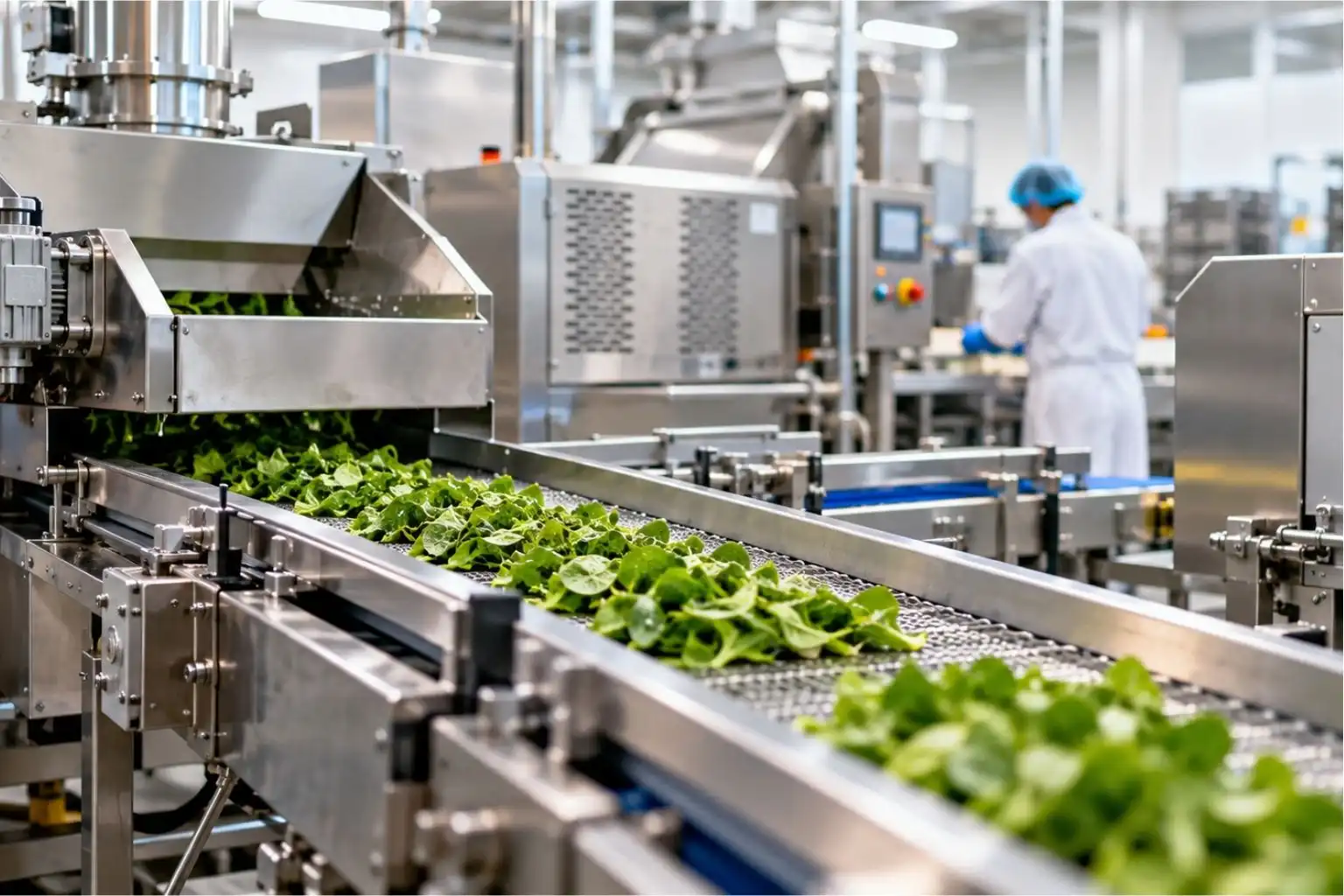
Unexpected equipment breakdowns can bring an entire food processing line to a halt, leaving products stranded on conveyors, delaying dispatch and increasing labour costs. A single worn bearing or seized gearbox can trigger hours of downtime, additional cleaning and lost production, turning a minor mechanical fault into an expensive operational problem.
According to a study by the National Institute of Standards and Technology (NIST), manufacturers relying more heavily on predictive and preventive maintenance recorded 52.7% less unplanned downtime and 78.5% fewer defects compared with those relying heavily on reactive maintenance.
So, if better maintenance and targeted equipment upgrades can prevent costly production stoppages, which improvements offer food processing plants the greatest return on investment?
What Are the Main Food Processing Methods?
Food processing is the conversion of raw agricultural or animal products into safe, consistent food products ready for sale, improving food safety by de-activating pathogens and helping seasonal produce stay available year-round.
Food processing equipment includes every machine used in that conversion, from preparation, mixing, thermal processing and packaging systems to washers, mixers, ovens, chillers, conveyors and packing lines, supporting processed foods that are less susceptible to spoilage than fresh foods. A typical line moves through five stages:
- Preparation: Washers, sorters, peelers, slicers and graders clean raw ingredients and remove anything unfit for use, while primary processing methods include drying, milling and butchering.
- Size reduction and mixing: Cutters, mincers and mixers bring ingredients to the right size and blend them evenly.
- Thermal processing: Ovens, fryers, pasteurisers, chillers and freezers cook, preserve or cool the product; thermal processing equipment changes product temperature to cook or pasteurise, and freezing preserves food below 0°C.
- Conveying: Conveyors for food processing carry product between stations at controlled speeds without contact damage.
- Packing: Fillers, sealers, labellers and checkweighers prepare finished goods for dispatch, while packaging equipment helps preserve food and extend shelf life.
These food processing methods also extend into tertiary processing, which produces ready meals and other ready-to-eat or heat-and-serve foods. Fermentation is another secondary process, breaking down sugar without oxygen to make products such as wine and beer.
For plant managers, maintenance engineers and buyers weighing a full line replacement against a retrofit, we explain what food processing equipment is, how the main processing stages work, six smart upgrades to cut downtime and improve efficiency, which upgrades usually pay off best in food plants, and how to plan and schedule the work. Modern food processing technology in its current industrial form developed in the 19th century.
6 Smart Upgrades to Keep Food Processing Lines Running
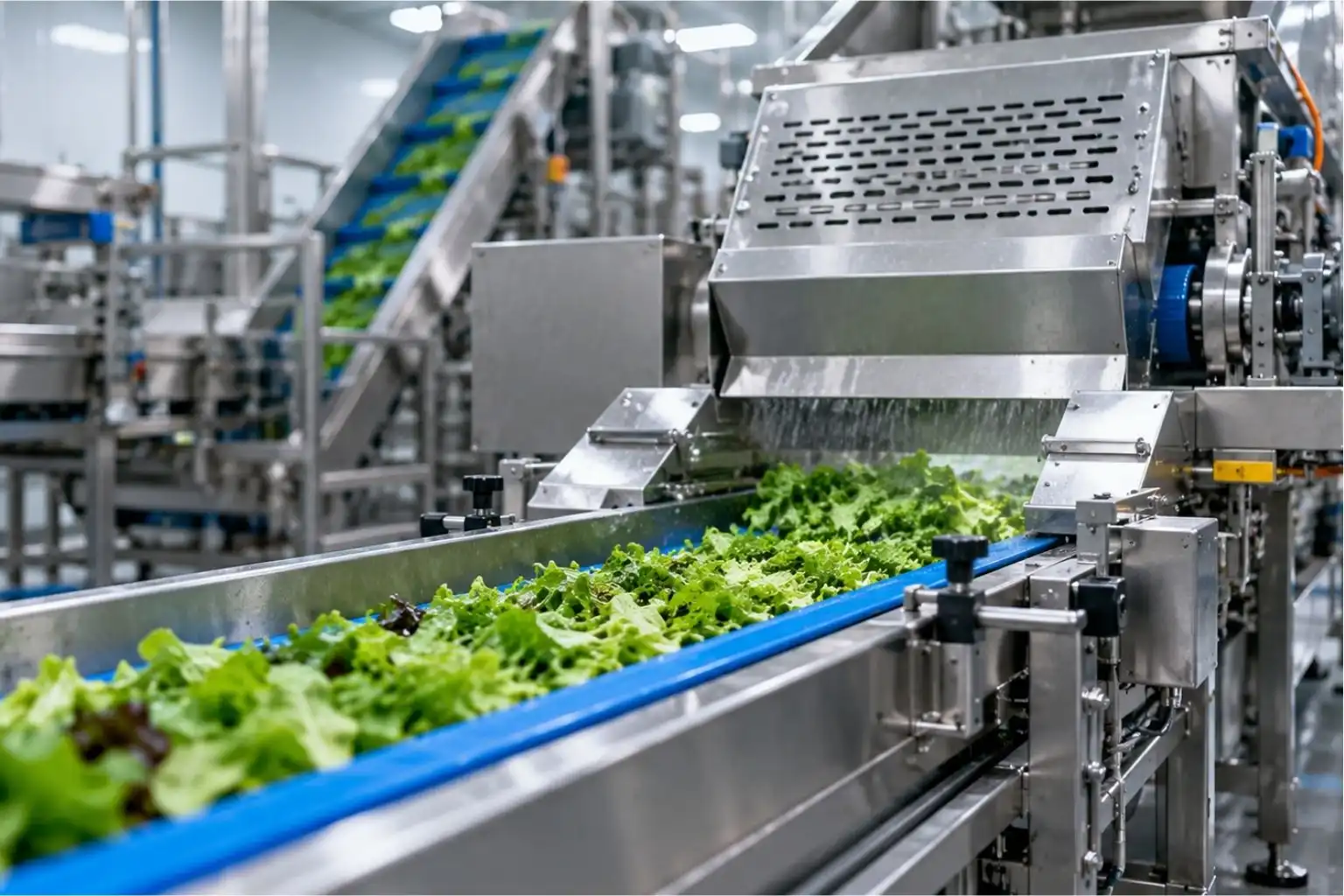
Below are the six upgrades, with the detail that shows where your budget should go first:
1. Read the Warning Signs Before Failure
Upgrades pay back fastest when they start with evidence, not guesswork. Watch for frequent unplanned stops, spares that are hard to source, inconsistent product quality and wear that cleaning no longer removes. Repair bills that start to exceed the value of the asset are another clear signal, as is output that can no longer keep pace with orders because throughput and production capacity no longer support current operations or the volume of food products you need to produce.
Parts discontinued by the original food processing equipment manufacturers are a common trigger, since one failed gearbox can then stop a line for weeks. A Maintenance & Inspection survey records wear on drives, frames and guarding across the line, giving you a ranked list of assets to upgrade before they fail, while noting that the right retrofit also depends on the type of food and hygiene requirements.
2. Fit Sensors to Legacy Machines First
Smart technology does not demand a new line. Wireless vibration, temperature, pressure and current sensors attach to existing motors and gearboxes and stream condition data to a gateway, showing which machines cause the heaviest losses. Across the food processing industry, that data improves efficiency by moving maintenance off the calendar and onto each machine’s actual condition, so parts get replaced when wear appears rather than on a fixed date.
Start with two or three problem assets, not the whole site. An older food processing machine with a sound frame but a failing drive is a strong retrofit candidate. Our Electrical Support can wire sensors, gateways and control panels into existing machinery.
3. Upgrade One Stage at a Time With Modular Conveyors
Replacing a full line means long lead times, a long shutdown and a large capital outlay. Modular upgrades swap one stage at a time while the rest of the line keeps running, spreading both cost and disruption. They can also cover separation equipment where a process needs to isolate specific components from a mixture, including a liquid stream. Good candidates include:
- Infeed and transfer conveyor sections
- Fillers, depositors and dosing units
- Labellers and coders
- Checkweighers and end-of-line packing stations
Conveyors for food processing match existing infeed and outfeed heights, so a section slots in over a weekend. Open-frame stainless steel conveyors food processing teams can wash quickly cut sanitation time. Our Fabrication & Manufacturing workshop builds matching frames and conveyor sections, avoiding long waits on food processing equipment manufacturers.
4. Add Automated Food Safety Inspection
Manual checks struggle as line speeds rise. Vision and sensor systems grade products by colour, shape or density and divert anything off-spec automatically, reducing waste and rework. Rejects can also be logged, so recurring faults point back to the station that caused them.
Some producers use AI systems to screen soybeans for quality before brewing, keeping flavour consistent across batches. That kind of grading suits raw ingredients as well as finished goods. At the end of the line, checkweighers and seal checks stop faulty packs leaving the site. Our Packaging & Distribution support covers the end-of-line equipment that gets checked product packed and loaded.
5. Specify the Right Stainless Grade and Hygienic Finish
Material choice decides how long a food processing upgrade lasts, and food-contact equipment should be made from food-grade, corrosion-resistant materials compatible with the product, the cleaning regime, and the food’s natural characteristics. Using 304 stainless where 316 is needed can cut equipment life in half.
Grade 316 resists chlorides better, which suits salty, acidic or high-moisture products, products preserved with salt, and aggressive cleaning chemicals. Food-contact surfaces typically need a finish of Ra 0.8 µm or below, with polished, crevice-free welds so hygienic design prevents bacterial harborage and allows effective cleaning.
Commercial food processing equipment built in the wrong grade can pit and harbour bacteria within a few years. The same rule applies to the stainless steel conveyors food processing lines rely on for open product. Guards, brackets and splash panels cut through Laser Profiling come off the bed with clean, square edges ready for welding and polishing, so hygienic detail starts at the cutting stage and equipment design should allow effective cleaning to minimise contamination risks.
6. Plan the Installation Around Production, Hygiene and People
Timing matters as much as the hardware. Schedule installs for seasonal lows or planned shutdowns, and order larger equipment well ahead, as lead times remain a factor in 2026. Installation planning should also account for utility requirements such as electricity, steam, gas and water. During the work, keep wood-based temporary materials off the floor, manage contractor foot traffic and separate neighbouring lines to prevent cross-contamination, as these are essential practices for hygienic project execution.
Connected equipment also collects production data, so build cybersecurity and access checks into the plan. New equipment must also meet safety and regulatory compliance for the specific application. Train operators before the new kit goes live, as the PMMI and FPSA 2026 report highlights workforce retention and knowledge capture as key priorities for the food processing industry.
Our Mechanical Engineering can install, align and commission new equipment inside your food processing plant shutdown window. Planning should also consider total cost of ownership, including purchase, installation, utilities, cleaning and maintenance.
Food Processing Equipment: Upgrades in the Food Industry
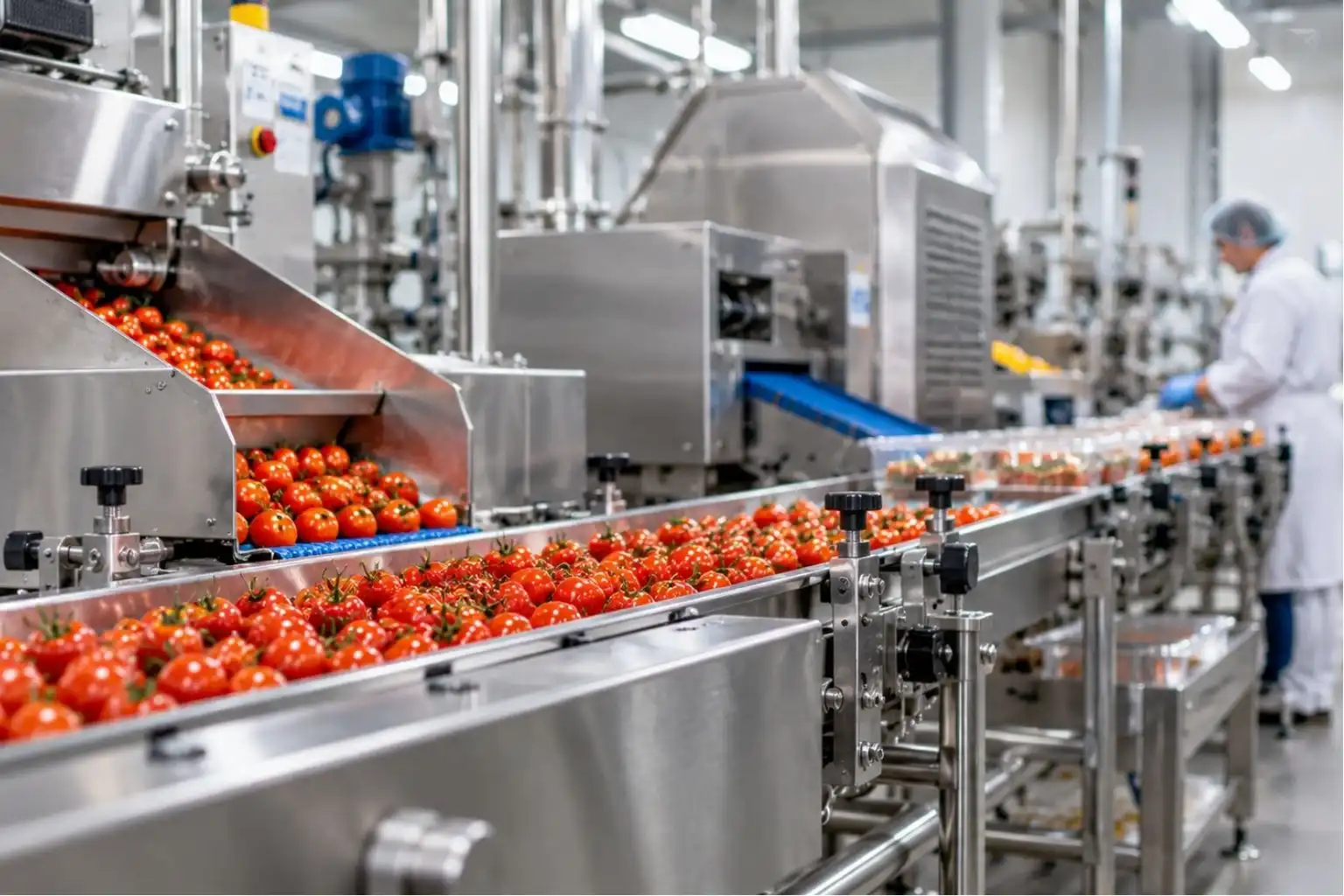
Every food processing plant has different operational challenges. The table below compares common equipment upgrades, the problems they address and their potential benefits, so you can match the issue on your line with the upgrade to tackle first.
| Equipment upgrade | Problem it addresses | Potential benefit |
|---|---|---|
| Predictive maintenance sensors | Unexpected equipment failures | Reduced unplanned downtime |
| Modular conveyor systems | Ageing or inefficient production lines | Improved production flow |
| Automated quality inspection | Inconsistent product quality | Reduced waste and defects |
| Stainless steel equipment | Corrosion and difficult cleaning | Improved hygiene and durability |
| Motor and drive upgrades | Excessive energy consumption | Lower operating costs |
| Updated control systems | Limited equipment monitoring | Better process control |
Processed food classification groups foods by how extensively they are processed. The Nova classification is a common framework, and these food processing levels matter for public health and food safety; primary processing includes drying, milling and butchering, while tertiary processing produces ready-to-eat or heat-and-serve foods.
Few plants need every upgrade at once. Start with the row that matches your biggest source of downtime or waste, then work through the rest as budget allows. A site survey can confirm which assets to tackle first and which upgrades will pay back fastest on your line.
Plan Your Next Upgrade Before the Next Breakdown
Now that you know the six upgrades that keep a line reliable, hygienic and efficient, compare them against your own assets. List each machine’s age, downtime hours, energy use, spare-part availability and hygiene condition, then rank the weakest links.
Singleton Engineering supports food producers across the UK from our Burnley, Lancashire workshop, trading since 2015. Our Food Production & Processing service covers modular line upgrades, drive and sensor retrofits, and maintenance of commercial food processing equipment, so lines keep running between planned shutdowns. Contact us at office@singletonengineering.co.uk or 01282 423198 to plan your next upgrade.
Frequently Asked Questions About Food Processing Equipment
Can you survey our food processing plant before quoting?
Yes. Our engineers can visit site to inspect the line, take measurements and check access, services and floor space. The survey flags wear or compliance issues early and gives you a clear scope of work, so the quote reflects the real job. We look at drives, frames, guarding, welds and surface finish, and note any areas that may affect hygiene or safety during installation.
Visits are arranged around your production schedule and hygiene rules, so the line keeps running as normal while we work. After the survey, you receive a written summary of our findings alongside the quote, giving you clear evidence for budget approval.
How do you schedule upgrade work around our production?
We plan installation around your shutdowns, weekends or seasonal low periods, and larger projects can be split into stages so only one section of the line stops at a time. Share your production calendar, hygiene rules and site access requirements at enquiry, and we will confirm a programme before any work begins.
Where possible, we fabricate and pre-assemble new sections in our workshop, which shortens the time spent on your floor. Our engineers keep your team updated at each stage, and any change to the timetable is agreed with you in advance. Once installed, the equipment is tested and commissioned before the line restarts production.
Can you add smart technology to our existing food processing machines?
Yes. We can fit vibration, temperature and current sensors, variable speed drives and updated control panels to existing food processing machines, provided the frame and drive train remain sound. We assess each machine first and tell you where a retrofit makes sense and where replacement offers better value.
Sensors are wired into a gateway so condition data reaches your maintenance team, helping them act on wear before it causes a stoppage. We start with the two or three assets causing the heaviest losses, then extend the system across the line once results are proven. Installation is planned around your shutdowns, so production keeps running throughout.
Do you take on emergency repairs when a food processing line breaks down?
Yes. Contact us at office@singletonengineering.co.uk or 01282 423198 as soon as a line stops, with a description of the fault, the machine make and model, and photos if possible. Our engineers assess the problem, then repair the failed component or fit a temporary solution to get production moving again.
Where a part is no longer available, we can measure the worn original and fabricate a replacement in our workshop, avoiding long waits on the original supplier. After the line restarts, we can inspect the surrounding equipment for related wear and recommend an upgrade that prevents the same failure from stopping your food processing plant again.