Deciding between metal fabrication and off-the-shelf parts shapes the cost, timeline, and long-term performance of almost any build. Get it wrong and you end up paying twice: once for the wrong part, and again for the fix. According to The Business Research Company, the global metal fabrication market reached $22.55 billion in 2025 and is projected to grow to $27.19 billion by 2030 at a compound annual growth rate of 3.8%.
This means more businesses than ever are leaning on a metal fabricator for parts that off-the-shelf catalogues simply cannot supply. So with both routes offering real advantages depending on the project, how do you know which route suits your project?
What Is Metal Fabrication?
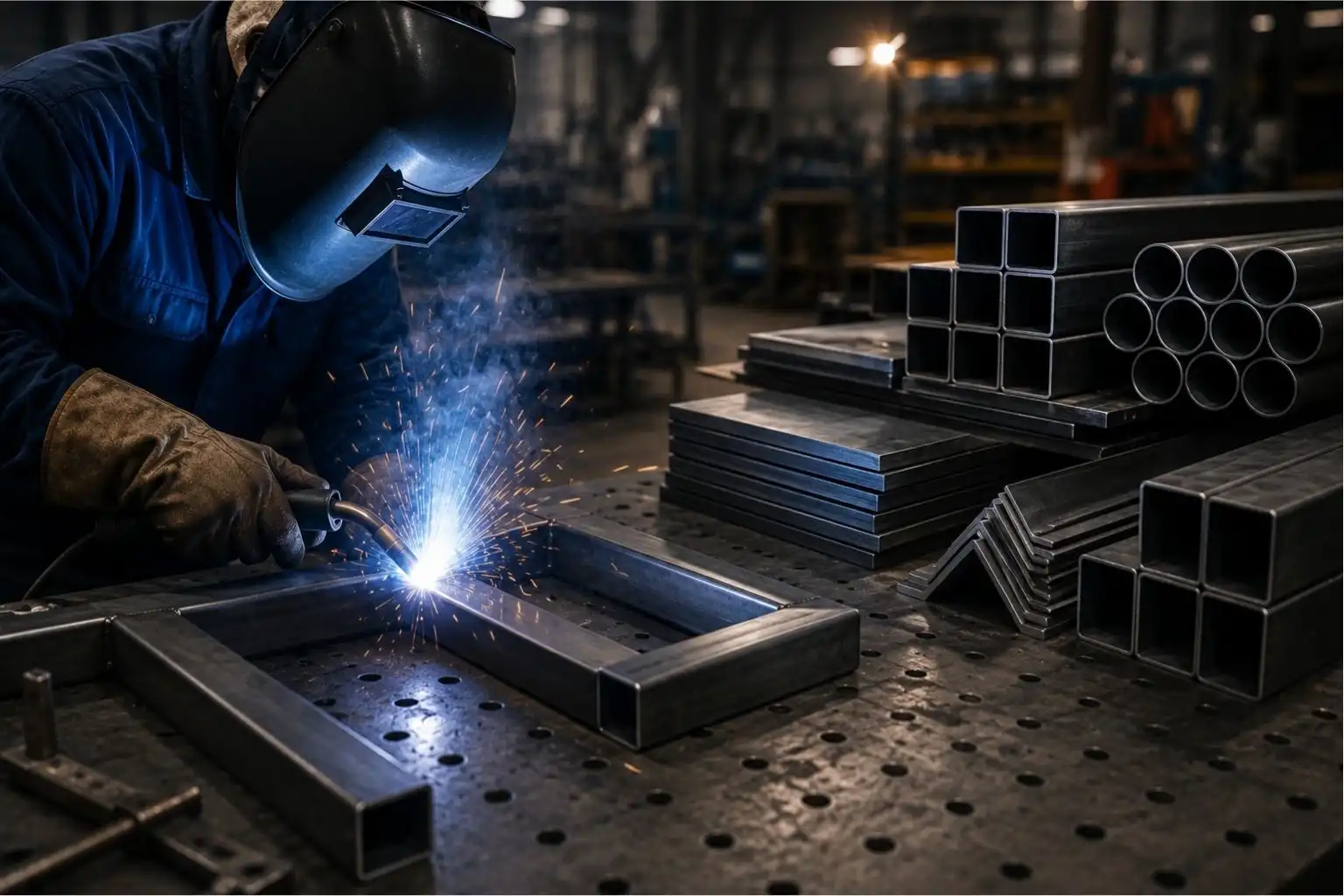
At its core, metal fabrication transforms raw metal materials into finished products, parts, or structures. It involves cutting, bending, machining, welding, and assembling raw materials to turn flat sheet, tube, or structural stock into a component built for one specific job, with welding joining metal parts using heat and/or pressure as part of the wider manufacturing processes.
A metal fabricator works from drawings or specifications supplied by the client, rather than pulling a part off a shelf. This means every dimension, tolerance, and material choice, be that means mild steel, stainless steel, or another option, gets matched to the actual requirement, not to a generic size range aimed at the widest possible market.
For businesses and project teams comparing custom metal fabrication with off-the-shelf parts in sectors such as aerospace, energy, medical, architecture, industrial automation, and utilities, that difference affects cost, lead time, fit, and long-term performance. The sections that follow explain the main types of metal fabrication, where each approach is used, and how to choose the right option for your project.
What Are The Main Types Of Metal Fabrication

Metal fabrication is not one single process. It splits into several disciplines depending on the material and the finished product required.
1. Custom Sheet Metal Fabrication
Covers thinner gauge metal cut, folded, and welded to create custom brackets, machine parts, and industrial enclosures, as well as enclosures, panels, brackets, and casings. It suits projects needing lightweight parts with tight tolerances, such as control panels or equipment housings.
As the foundational step in this work, our laser profiling service handles the precision cutting stage in-house, where plasma or laser cutting tables are commonly used; laser cutting is a high-quality sheet metal method that delivers high precision and a smooth finish for detailed machined parts.
2. Custom Structural Steel Fabrication
Deals with heavier steel sections, beams, and frames used in buildings, platforms, and industrial structures. This category demands precision at scale. Custom structural steel fabrication is often chosen when fabrication requirements call for both customization and material versatility.
It also meets the load and safety standards that a decorative piece does not. For projects that combine structural work with moving parts or assemblies, our mechanical engineering team can take the build beyond fabrication alone.
3. Custom Stainless Steel Fabrication
The stainless steel fabrication process focuses on corrosion resistance and hygiene, while also delivering durability, strength, and a polished aesthetic; because stainless steel is comparatively easy to fabricate into stainless steel products.
It remains the standard choice for food processing, medical equipment, and marine environments where standard mild steel would corrode too quickly. Each type shares the same core advantage: the part gets built around the project, not the other way around.
What Is Off-the-Shelf Metalwork
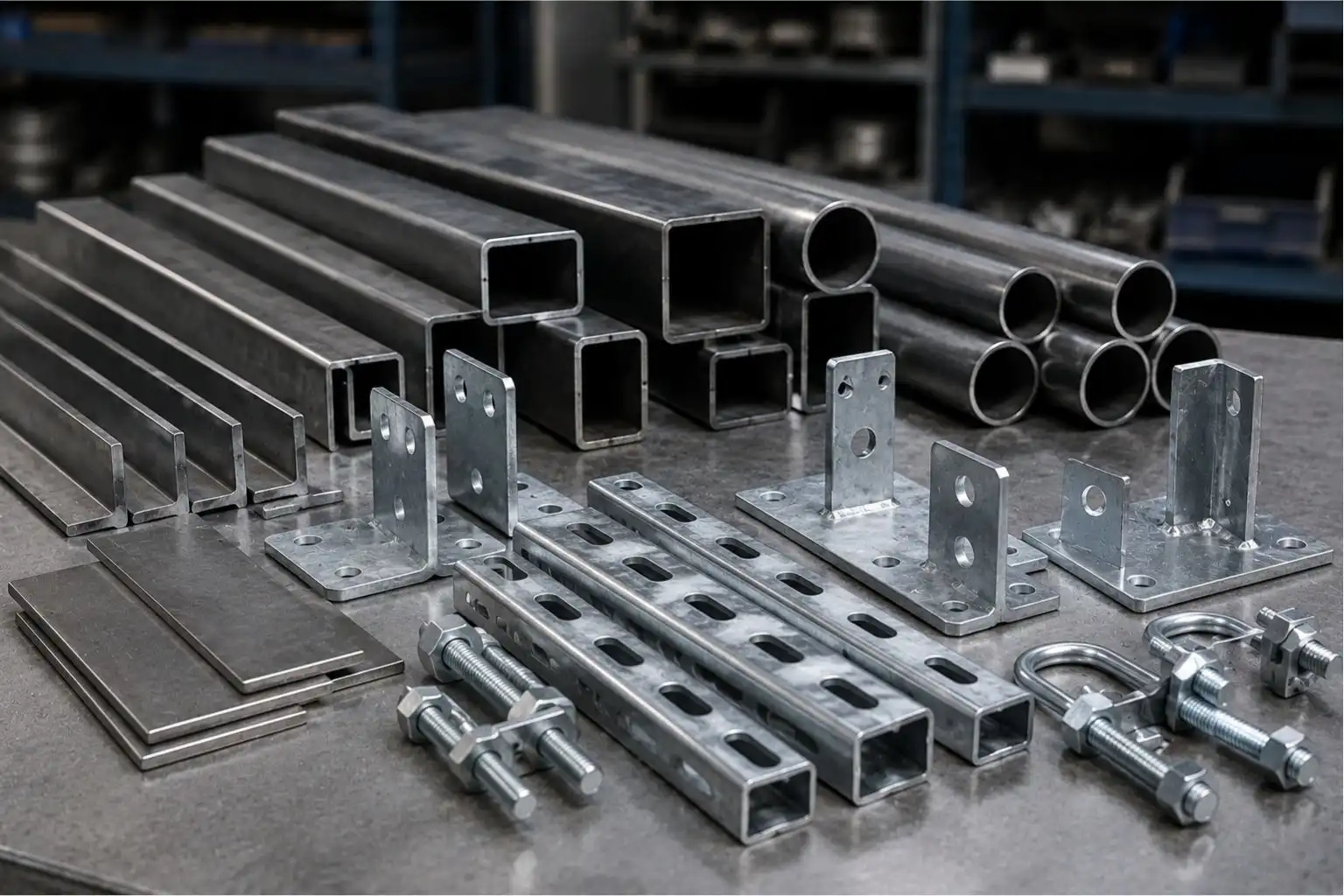
Off-the-shelf metalwork means standard brackets, panels, fixings, and profiles produced in fixed sizes and sold ready to use. A buyer picks the closest match to their requirement from a catalogue rather than commissioning a bespoke part. This works well when the standard size happens to fit the project.
When it does not, buyers end up modifying the part, accepting a compromise on quality, or losing time trying to force a fit that was never designed for their specific use case. Off-the-shelf products also tend to use materials suited to a broad market rather than a specific application. That keeps costs low but can shorten the working life of a part exposed to conditions outside the standard design range.
Metal Fabrication vs. Off-the-Shelf: A Quick Comparison
The table below sets out how the two approaches compare across the factors that matter most on a real project.
| Factor | Off-the-Shelf | Custom Metal Fabrication |
| Upfront cost | Lower, due to bulk production | Higher, due to design, tooling and skilled labour |
| Lead time | Fast, often in stock or short order | Longer, typically 1-2 weeks for simple parts |
| Fit and precision | Standard sizes only | Built to exact specification and tolerance |
| Materials | Cost-effective, broad-market grade | Chosen to match the application |
| Best suited for | Tight budgets, tight deadlines, repeat builds | Aerospace, energy, medical, architectural or industrial projects |
| Long-term value | Risk of rework or early replacement | Lower risk of rework over the product lifecycle |
The pattern across every row is the same: off-the-shelf wins on speed and price, while custom fabrication wins on fit and long-term value. That upfront cost gap is easing too, with newer additive methods cutting material waste from 70-90 percent down to under 5 percent on some projects.
Where Is Industrial Metal Fabrication Used
Industrial metal fabrication is used in many industries where standard parts cannot meet the required specification. A few examples make the pattern clear.
Control panels and enclosures built to UL 508A certification and NEMA standards rely on custom fabrication specifically to meet compliance requirements in utilities, telecom, and industrial automation. No off-the-shelf panel is designed to hit those certification marks out of the box. If a build includes wiring or control systems alongside the enclosure itself, our electrical support team works alongside the fabrication process to keep the whole job under one roof.
Aerospace, energy, healthcare, and medical device manufacturing default to custom fabrication almost without exception, since precision requirements in these fields leave little room for a standard-size part.
Architecture and design projects also lean on fabrication when a building facade, a furniture piece, or a commercial fit-out needs a distinctive shape that no catalogue product offers. In these cases, metal fabrication services provide the design freedom that off-the-shelf simply cannot match.
Industrial enclosures sit at the other end of the spectrum. Standard brackets or panels reduce lead times significantly when a project does not need flexibility, which shows that off-the-shelf still has a place even in industrial settings. Once a design is finalised, our general manufacturing capability covers the wider production run beyond fabrication itself.
How Do You Choose Between A Metal Fabricator And Off-The-Shelf Parts
There is no single correct answer here. The right choice depends on the project’s budget, timeline, and performance requirements, and whether standard parts or tailored fabrication solutions make more sense.
- Choose off-the-shelf when the standard size fits the application, the budget is tight, and the timeline does not allow for a multi-week lead time. It suits repeatable builds and high-volume projects where uniformity matters more than a bespoke fit.
- Choose a metal fabricator when the project needs a specific tolerance, a particular material grade, or a shape that no catalogue offers, helping achieve the desired shape when no catalogue part fits. This applies to structural work, compliance-driven builds, and any project where the cost of a poor fit outweighs the savings on unit price.
- Watch for over-engineering too. Custom metal fabrication can tempt buyers into specifying tighter tolerances or more exotic materials than the project actually needs. An experienced team should work closely with the client and be willing to push back when added complexity does not add functional value.
To keep a fabricated part performing to spec well after installation, our maintenance and inspection team can support the asset for the long term, rather than leaving performance to chance once the build is complete.
Make The Right Choice For Your Project
Now that you understand how custom structural steel fabrication compares with a simple run of standard brackets for an enclosure, the next step is matching the method to the actual requirement. That keeps costs under control, prevents early failure, and helps businesses land on the approach that genuinely fits the project sitting ahead of them.
At Singleton Engineering, we have built our reputation over many years by helping customers deliver completed fabrication and manufacture solutions under one roof. We combine deep fabrication expertise with full manufacturing capability, handling design, material selection, assembly, testing, and delivery as part of end-to-end support for the best possible experience.
View our Fabrication & Manufacturing services to keep your fabricated components, steel products, and other end products for industrial customers performing reliably well after installation. Contact us at office@singletonengineering.co.uk or 01282 423198 to discuss your project requirements today.
Frequently Asked Questions About Metal Fabrication and Off-The-Shelf
Is custom metal fabrication always more expensive than off-the-shelf?
Not always. Off-the-shelf parts usually cost less upfront because bulk production spreads tooling and labour costs across a large volume of identical items, keeping the unit price low. Custom metal fabrication carries a higher price tag at the outset, since each part is built to a specific drawing rather than pulled from stock.
Over the life of the product, though, custom fabrication often works out cheaper, because it avoids the modification, rework, and early replacement that a poorly fitting standard part tends to cause. Total cost of ownership, not just unit price, is the better measure to compare, and it usually favours whichever option matches the application without needing adjustment.
How long does metal fabrication take compared to buying off-the-shelf?
Off-the-shelf metalwork is typically in stock or available on short order, which makes it the faster route when a project cannot wait. Custom metal fabrication takes longer, since a part has to be designed, sourced, cut with the right tools, and assembled from scratch rather than picked from a catalogue.
Simple custom parts commonly take one to two weeks, while larger or complex production runs can take several weeks beyond that, depending on the material, the tolerance required, and how many stages the fabrication process involves before the part is finished, including welding, letting weldments cool, and then grinding them clean. Some steel weldments may also be annealed to relieve residual stresses, and heat treatment uses controlled heating and cooling to change metal properties.
What industries rely most on custom metal fabrication?
Aerospace, energy, and medical device manufacturing rely heavily on custom metal fabrication, since these fields demand tight tolerances and materials chosen for a specific performance requirement rather than a broad market. Regulated industrial sectors such as utilities and telecom follow a similar pattern, particularly for control panels and enclosures that must meet certification standards like UL 508A.
In each of these industries, an off-the-shelf part is rarely designed to hit the exact tolerance, material grade, or compliance mark the application calls for. Architectural and structural projects needing a distinctive shape, and any build where a poor fit carries real cost or safety consequences, also lean on custom fabrication by default.
Can off-the-shelf parts be modified to fit a custom application?
In some cases, yes. A standard part can be drilled, cut, or reshaped to fit a particular application, and this is sometimes the fastest way to get a project moving without waiting on a bespoke build. Modified parts may also need finishing work afterward, which adds time and cost and can affect the finished result.
This could mean bead blasting to remove burrs and imperfections from the surface, powder coating as a protective layer against rust, zinc coating as a barrier that helps prevent rust on metals, anodising for aluminium or titanium, or electropolishing to improve the appearance and corrosion performance of steel.
Modifying a standard part often compromises its original design, though, and can shorten its working life or affect how it performs under load. For applications with strict tolerance, material, or compliance requirements, working with a metal fabricator from the outset usually delivers a more reliable result than adapting a stock item. It also avoids the labour cost of reworking a part never designed for the job, which can quickly erase any initial savings made.